

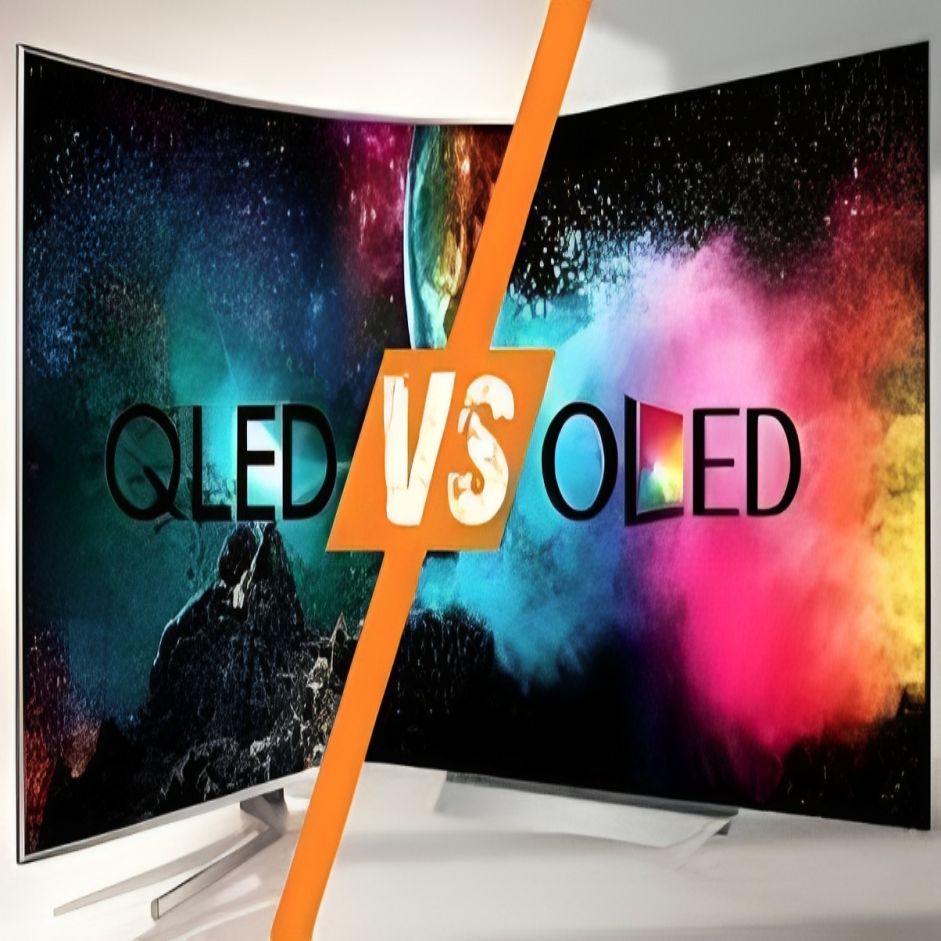
Buying a new TV is no longer as simple as picking a screen size and brand. With today’s fast-evolving display technologies, one of the biggest choices you’ll face is QLED vs OLED.
What is OLED?
OLED stands for Organic Light-Emitting Diode. Unlike traditional LED TVs that rely on a backlight, each pixel in an OLED panel emits its own light. This allows for:
- Perfect blacks: Pixels can switch off completely, producing infinite contrast.
- Ultra-thin screens: Since no backlight is needed, OLED TVs are often sleek and lightweight.
- Wide viewing angles: The picture remains accurate even when viewed from the side.
However, OLED isn’t perfect. It tends to cost more than other technologies, especially in larger sizes. There’s also the potential risk of burn-in where static elements like channel logos can leave a faint mark over time. For most viewers, burn-in isn’t a major issue, but it’s worth noting if you watch the same channel daily
What is QLED?
QLED stands for Quantum Dot LED, a term made popular by Samsung. QLED TVs are still fundamentally LCD TVs, but they use a quantum dot layer with an LED backlight to enhance brightness and color reproduction.
What this means for viewers:
- Brighter screens: Ideal for living rooms with lots of natural light.
- More affordable: QLED models are generally cheaper than OLED in larger sizes.
- More size options: You can find QLED TVs ranging from small screens to nearly 100-inch displays.
The downside? Because QLED still uses a backlight, it can’t achieve the same deep black levels as OLED. Even with advanced dimming, some light can leak, leading to grayer blacks.
QLED vs OLED: Key Differences
- Picture Quality: OLED wins with its unmatched contrast, true blacks, and near-perfect uniformity.
- Brightness: QLED shines brighter, making it better suited for bright rooms or daytime viewing.
- Viewing Angles: OLED maintains accurate color and contrast at nearly all angles, while QLED tends to fade when viewed from the side.
- Durability: QLED TVs aren’t at risk of burn-in, while OLED can be if used improperly.
- Price & Size Options: QLED TVs are available in a wider range of sizes and prices. OLED remains pricier, especially for screens larger than 65 inches.
New display technologies are emerging. QD-OLED (a hybrid using quantum dots with OLED panels) and MicroLED (tiny LEDs acting as individual pixels) aim to combine the strengths of both. But for most buyers today, OLED still leads in pure picture quality, while QLED remains the more affordable large-screen option.
QLED vs OLED: FAQs
1. Is OLED better than QLED for movies?
Yes. OLED offers better contrast, deeper blacks, and superior viewing angles, making it ideal for home theater setups.
2. Does QLED last longer than OLED?
QLED generally has fewer concerns about burn-in and may last longer under heavy use. However, modern OLED TVs are also built to last many years with normal usage.
3. Which TV is brighter, QLED or OLED?
QLED TVs are brighter, making them the better choice for sunny rooms. OLED still delivers excellent brightness but excels more in dark or dimly lit environments.
4. Are QLED TVs cheaper than OLED?
Yes. QLED TVs usually cost less, especially in larger sizes (75 inches and above). OLED is typically more expensive but offers superior picture quality.
5. Should I wait for new technology like MicroLED?
MicroLED and QD-OLED are promising but remain expensive and limited. For most buyers, OLED and QLED are the best options available today.
When it comes to QLED vs OLED TVs, there’s no universal winner — it comes down to how you watch and where you’ll place your TV. If you’re a movie lover who craves the deepest blacks and cinematic visuals, OLED is the clear choice. But if you want a bigger screen for less money and a display that performs well in bright spaces, QLED is the smarter buy.
Either way, both technologies have matured to the point where you’ll enjoy excellent image quality compared to older LED TVs. Your decision simply depends on whether you prioritize contrast or brightness, and how much you’re willing to spend.