

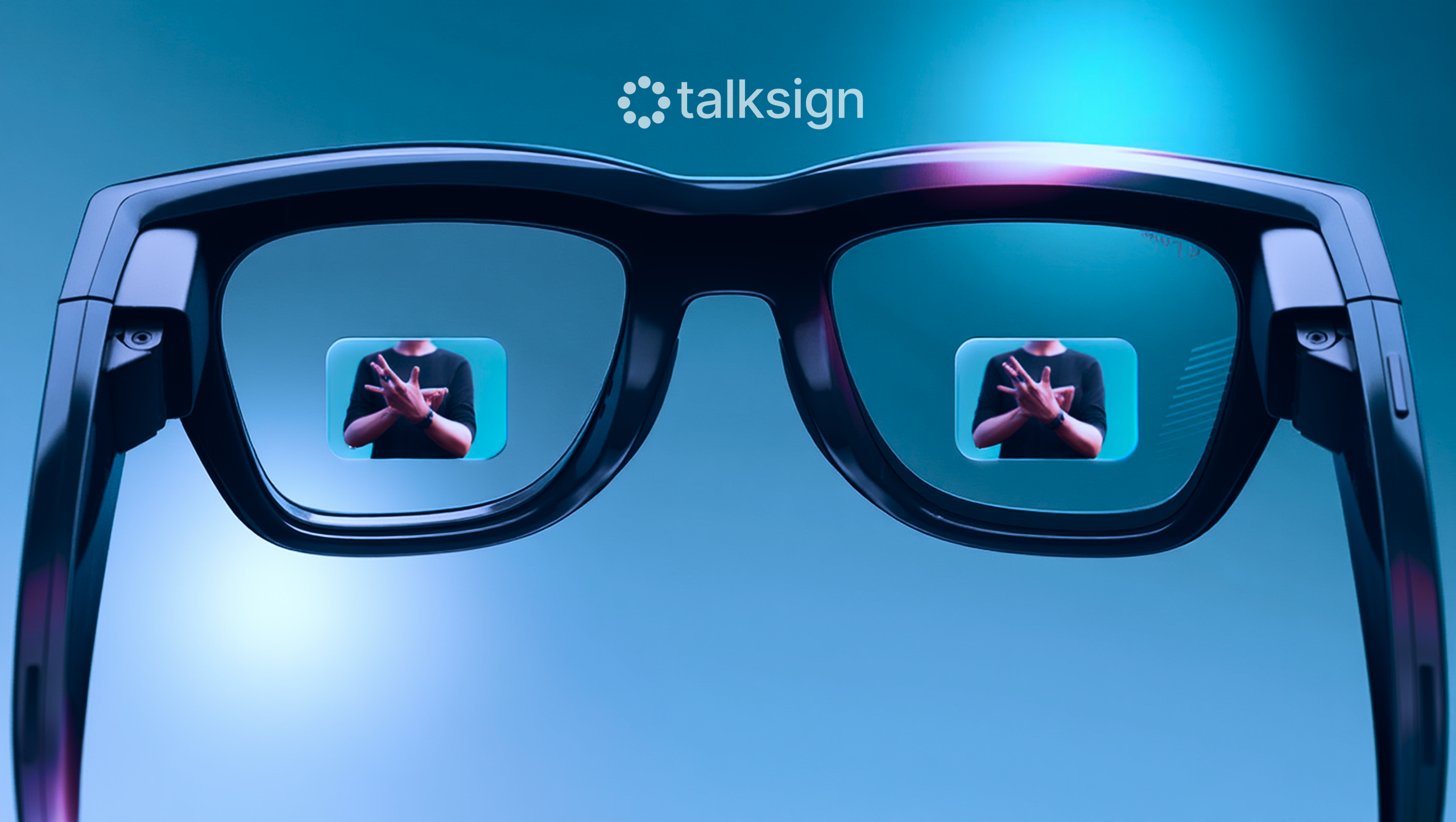
A Nigeria- and UK-based artificial intelligence company, Talksign, has introduced two new AI-powered sign language translation models aimed at improving communication for people with hearing impairments.
The company launched Palm 1.0 and Echo 1.0 on May 20, marking another milestone in AI accessibility technology and real-time sign language translation.
Palm 1.0 is designed to interpret American Sign Language (ASL) into text or speech in real time. According to the company, the model delivers 84.2% semantic accuracy and 79.6% word-level accuracy, making it one of the most advanced sign language translation systems developed by a Nigerian AI startup.
The model was trained using more than 71,000 ASL samples and built with transformer-based AI architecture powered by a system known as SAGE (Spatial Attention Graph Encoder). This technology tracks 133 body landmarks including hand, head, and shoulder movements, allowing the system to understand complete sentence structures and conversational signing instead of isolated gestures.
Speaking on the launch, Edidiong Ekong said the company is preparing the technology for large-scale adoption across smartphones, smart glasses, hospitals, and classrooms.
Echo 1.0, the company’s second product, converts spoken or written English into photorealistic ASL video using AI-generated avatars. The system produces 30 frames-per-second video with an estimated latency of just 29 milliseconds, creating near real-time signing experiences.
Unlike basic translators that perform direct word substitutions, Echo 1.0 converts English into ASL gloss while preserving the grammar and structure of sign language. The AI system then transforms the gloss into realistic animated signing sequences using neural rendering technology.
One of Echo 1.0’s standout features is its ability to create personalised signing avatars from a single reference image, making interactions feel more natural and human-like.
According to Kazi Mahathir Rahman, the technology could eventually make sign language a “first-class interface” for interacting with AI systems, reducing dependence on keyboards and voice commands.
The launch builds upon Talksign-1, the company’s earlier AI model introduced in February. That version supported translation for around 250 ASL signs but struggled with continuous signing and fingerspelling. Palm 1.0 and Echo 1.0 were specifically developed to overcome those limitations.
The development comes at a time when global demand for AI accessibility technology continues to rise. According to the World Health Organisation, more than 430 million people worldwide experience disabling hearing loss, while millions rely on sign language as their primary means of communication.
Talksign said the new models could be especially useful in environments where professional interpreters are unavailable, including emergency broadcasts, healthcare settings, educational institutions, and live news coverage.
The company also noted that privacy remains a key focus. Landmark extraction is processed directly on users’ devices, meaning raw video data is not transmitted to company servers.
Despite the breakthrough, the startup acknowledged that the models still have limitations. Echo 1.0 currently supports only English input, although additional languages including Spanish, French, and Arabic are planned for future releases. The company also intends to support more sign languages such as British Sign Language, German Sign Language, and Nigerian Sign Language.
Talksign plans to fully roll out both products on desktop applications and Meta Ray-Ban Smart Glasses by August 20, 2026.
With this innovation, Talksign AI joins a growing list of AI accessibility companies working to reduce communication barriers for Deaf users globally, including platforms like SignVrse.
Read more tech stories here: Abawoleye Tech Stories
Yo, I gotta say, y777game is pretty alright. Graphics are decent, and payout times were quick. Thumbs up from me! Check them out here: y777game
Heard about BingoPatti888? Gotta say, gave it a shot and it’s pretty decent. Nothing groundbreaking, but a solid option if you’re looking for some casual fun. Check it out for yourself bingopatti888.
BetaAppCasino, huh? Gave the app a spin and was pleasantly surprised. The interface is clean, and the games are running smoothly. Might be worth a look if you are looking for a new place to play betaappcasino.